I am Reading

This blog is all about what I am reading and sharing my reading with you. I will recommend books for grown up reading and children to read.
Showing posts with label historical novel. Show all posts

Wednesday, 22 March 2017

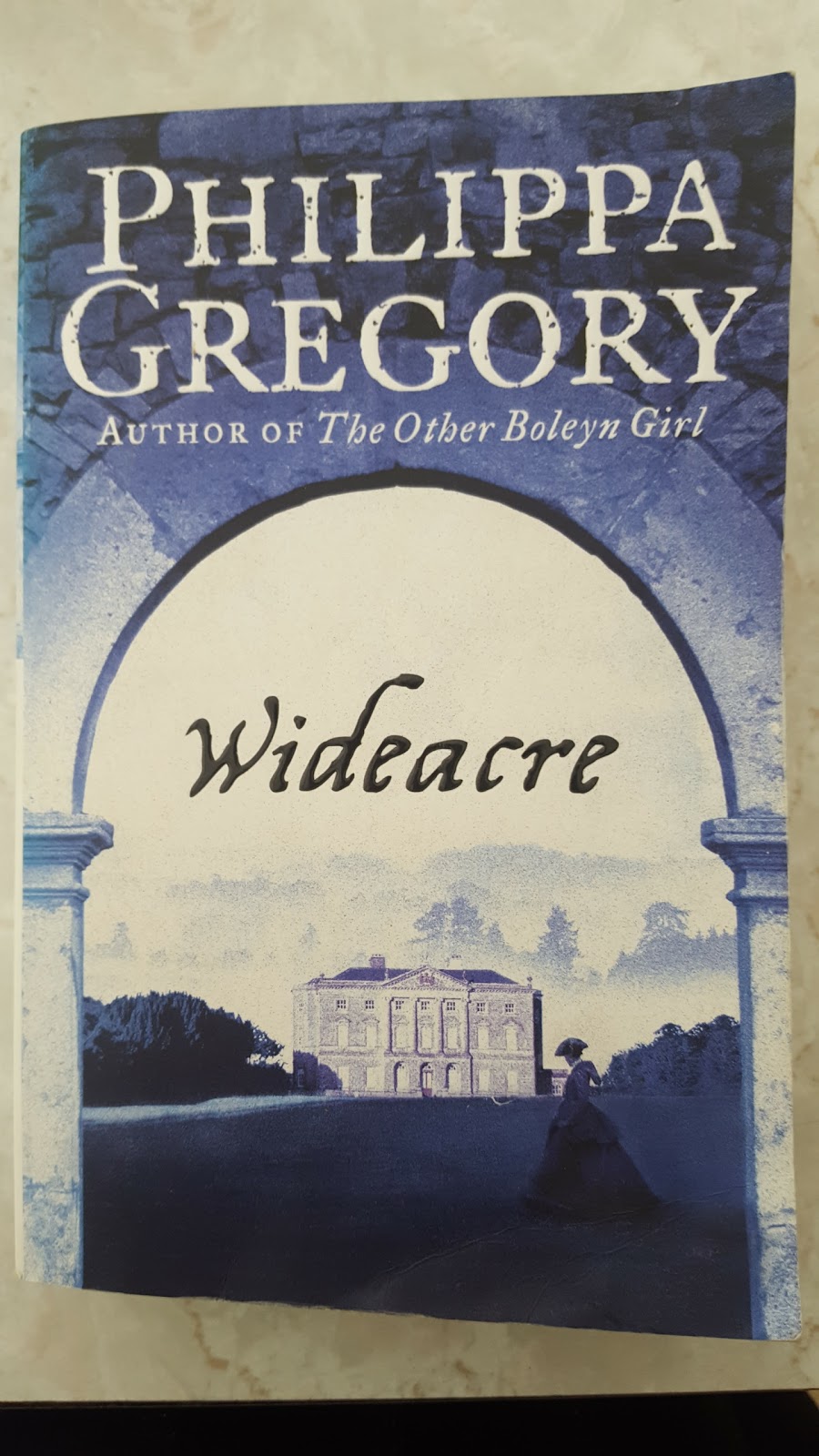
Wildacre by Philippa Gregory

Wildacre was the first book I have read written by Philippa Gregory.  She is a widely aclaimed author of The Other Boleyn Girl (which was made into a movie I quite enjoyed) and other historical fiction based on the kings and queens of England.  You can find out more about Philippa Gregory's books here.  Wideacre is the first of a trilogy... but I won't be reading the sequels or any of Gregory's other books.  This one put me off her books completely.


Here is the cover and the blurb on the back of the book:


The central character is Beatrice Lacey.  She is the second child of what is essentially a loveless marriage  Her elder brother, Harry is sickly and mothered excessively by their mother, while Beatrice is strong and healthy.  Consequently, her father, the Squire, takes her out on the land, teaching her all he knows about farming and the land, growing within her a passion for the land, for Wildacre.


As Beatrice blooms into her early adolesence she begins to understand that she will not inherit Wildacre.  It will instead be entailed on Harry who is away at school.


This realisation ignites something within Beatrice that consequently makes the character not a character I loved or even liked.  The change in Beatrice and the actions she was to undertake and their consequences made her one of the most unlikable central characters to a book I have ever read.


Between the murder, debauchery, incest and deceit that the book descended into, I was left with a dissatisfied feeling reading this book.  I completed it, because I rarely leave a book incomplete, but I have no desire to read the sequels or any other Philipa Gregory book as a result.  It simply is not a book I would recommend.

Tuesday, 28 February 2017

Poldark: Jeremy Poldark by Winston Graham

Jeremy Poldark is the third book in the Poldark series by Winston Graham and carries on where the second book, Demelza, left off in the lives of Ross and Demelza Poldark, their relatives, friends and enemies.

This is the front cover and blurb:


This was a hard book to track down.  I bought the first two books and eventually got round to reading them once work permitted several months later.  Despite having already watched the first series of the BBC 2015 TV series (a second series was commissioned and has aired), I devoured these books quickly and was soon keen to know the outcome of Ross' arrest at the end of the second book and first TV series. 

But, alas, Jeremy Poldark was an elusive book on the shelves of Whitcoulls and Paper Plus.  I would ask, and I would be told that the book was sold out.  But then, at Paper Plus in Te Awamutu, I struck gold with one of the sales team who looked it up on their computer and was able to order me in a copy.  But now I find I can not access the next six books in the series... the seventh book being the only other book available for purchase currently through the Paper Plus website!

As I alluded to earlier, this book deals with the aftermath of Ross being arrested at the end of the Demelza book for murder, inciting a riot and ship wrecking.  These charges weigh heavily on Ross and he nearly sinks his own defence in an effort to remain true to the facts and his own beliefs.  Meanwhile Demelza is determined to help Ross, and endeavours to create new friendships and use her charm to create influence with the court magistrate.

During this time, Francis has a crisis of his conscious in his dealings with the Warleggans and his loyalty to Ross; Francis and Verity attempt to mend fences with each other; Ross and Francis mend their relationship and endeavour to go into business together; George Warleggan attempts to thwart justice and derail Ross financially; Francis and Captain Blamey come to a truce; Verity meets her step children; and Demelza hides the fact she is pregnant from Ross and her jealousy of Elizabeth threatens to derail the love she and Ross share.

Despite the fact that the book is called Jeremy Poldark, he is not mentioned directly until the very end of the second to last chapter.  The book following this book is called Warleggan, but I don't know when I will be able to read it, if at all.

Sunday, 26 February 2017

Poldark: Demelza by Winston Graham

Demelza is the second book in the Poldark series by Winston Graham.  The events in this book are also covered in the 2015 BBC tv series.  It carries on from the first book, Ross Poldark, taking up where that one left off.

This is the cover and blurb for the book.


This book covers how Demelza grows into the role of wife of a gentleman and mother.  Julia is born in May and become the focus of the Poldark household as Demelza and Ross adjust to being parents.  They hold a chiristening party for their daughter which Demelza's father and new step mother unexpectedly attend and put the neighbours and guests at odds with her background.


Demelza's adjustment to society as a gentleman's wife, her relationship with Ross and his wider family are a running theme throughout this book.  But Demelza's beauty, charm and warmness endear her to not only the people who rely on Ross for their livelihoods, but the neighbours of his class.  Ross' relationship with authority, his cousin Francis and the Warleggan's, which could cause his downfall in a variety of ways is another constant theme.


Ross' friends Mark and Dwight (the doctor) also feature strongly in this book and befall their own scandals.  Tragedy befalls the Poldarks and pushes Ross to be careless, which puts his freedom and everything he has at risk.

Despite having watched a large part of the action of this book during the first television series, I could barely put this book down and was very keen to read the following book.  This book is followed by Jeremy Poldark.

Thursday, 25 August 2016

Poldark: Ross Poldark by Winston Graham

Ross Poldark is the first book of the Poldark series by Winston Graham.  In the 1970s there was a tv series based on the book, and in 2015 the BBC released a new tv series that covered the events covered in the first two books of the series.

This is the cover and the blurb for the first book:


The book naturally introduces the major characters, the places, tensions and themes of this series in the opening chapters.  Ross Poldark, a young man who had run ins with the law in his youth, has returned from the American colonies after the English armies were defeated in the American Independence War to find his father is deceased, his servants are drunken and his childhood sweetheart, Elizabeth, is married to his cousin, Francis.

Ross sets about putting his house, farm and servants to rights, and then turns his attention to his derelict mines.  During this time he also rescues a young girl, Demelza, from a brawl.  He then takes her home to be his scullery maid.  His cousin Verity complicates Ross' life when she falls in love with Captain Blamey, who her father and brother consider to be an unsuitable match for Verity and ban her from associating with him.

Ross discovers that his cousin Francis is poor at business and is more inclined to gamble and drink his time away with his friends the Warleggans.  The Warleggans, originally blacksmiths, have become money lenders, and the majority of the landed upper classes and mine owners seem to be indebted to the Warleggans at various levels.  The Warleggans have become wealthy from their business dealings and use this wealth to elevate their status in society.  However, Ross takes an instant dislike to George and his uncle Cary, and does not trust them in business either.

This book is followed by the book Demelza in the series.  There are eleven books in the series.

It is a delightful look into the Georgian era, post the loss of the American colonies and for those who have read a wide range of Jane Austen books, you will be able to contrast the two eras and compare and contrast the manners and social expectations of the times.  And you always find the book better than the movie or tv programme based on it.

Saturday, 23 January 2016

A Tattooed Heart by Deborah Challinor

A Tattooed Heart is the fourth and final book by Deborah Challinor in her series about four convicts deported from Newgate Gaol to Sydney in the early 1830s.  I had been hanging out for the release of this book in late 2015 since I polished off The Silk Thief in December 2014.  So I pounced on it when I first saw it in store in November, and I tried eking this book out over a number weeks, but once a weekend came I just devoured it.

So check out the cover and blurb here below.


Each book has covered the story of all the girls, but a little more focus is placed on one girl in each book.  The initial book, Behind the Sun, focuses on all four girls, introducing the characters and exploring their growing bond.  In Girl of Shadows the focus was more on Sarah; in The Silk Thief it was Harriet that was the focus.  So if you have read the previous three books, it stands to reason that Friday is more of the focus in A Tattooed Heart.

This book picks up where the previous, The Silk Thief, leaves off.  Harriet seems to be over the demons that afflicted her in the previous book.  Although still fragile, she has realised the love and support she has from her husband and friends and endeavours to live her life.  Her husband, James, plots to ensure Harriet has even more to live for, surprising her with a reunion that bolsters Harriet and brings fresh characters into the series that impact on the story lines.

Friday mopes about until a surprise return by Aria and a new direction in her career proposed by Mrs Hislop give her a much needed boost.  Despite these events, the blackmail still weighs heavily upon her and her weakness for the booze threatens to lose both Aria and the dedication of Mrs Hislop from her life.  Friday also finds that Bella Jackson throws a curve ball into her life as well as a possible solution for a problem Mrs Hislop has long kept secret.

Aria also has revenge against Bella Jackson on her mind, after the theft of her uncle's tattooed head.  But her mother and father and fiancée also come looking for her in an effort to drag her away from Friday.

Sarah continues to use her unique talents to help the group figure out Bella Jackson's secrets and hold over them.  While she tries to keep the blackmail secret from her husband, Adam, he actually knows more than she realises and in the end gets the story more or less out of Sarah. 

Meanwhile, Jonah O'Leary lurks ominously around, convinced Harriet is the key to finding his brother and thinks baby Charlotte is the leverage he needs.  Leo makes a deal with Bella to protect young Walter who has returned despite the danger to his life.  Matthew is heartbroken by one young lady, but James' surprise for Harriet opens up new opportunities for Matthew.  And when the worst comes to the worst, Mrs Hislop's assistance is required and it brings back Captain Rian Farrell and his crew (from The Smuggler's Wife series and Girl of Shadows) back into the story to help Harriet, Sarah and Friday to save baby Charlotte.

Once again the book submerges you into the life of 1830s Sydney with apt description, a story line that sucks you in and then some twists and turns and a conclusion that rounds up the stories of these characters.  While you are sad to leave these characters, as it is the end of the series, the storylines are completed and it is the end.

Wednesday, 20 January 2016

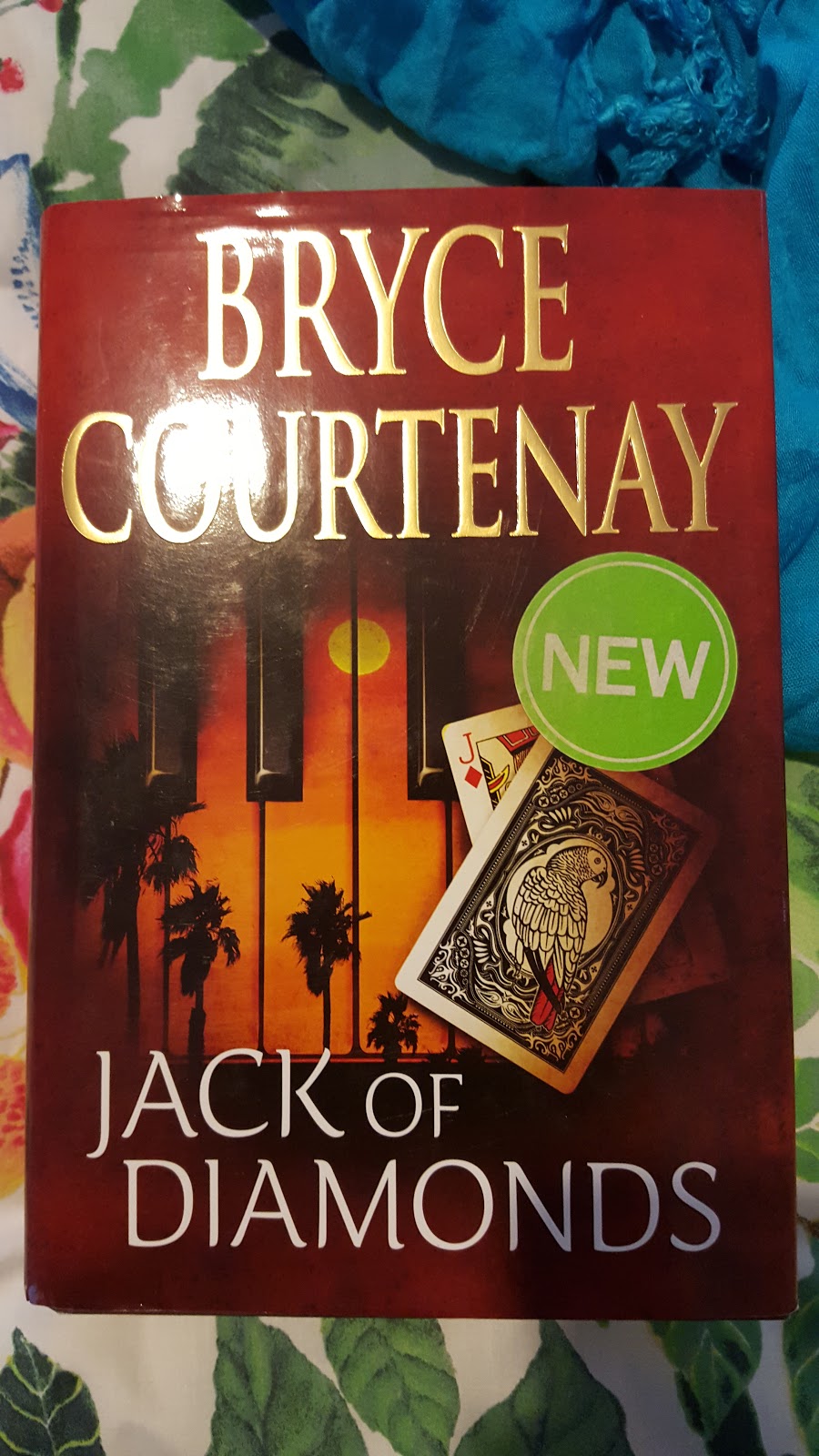
Jack of Diamonds by Bryce Courtenay

Bryce Courtenay is a legendary writer.  South African born and raised, Courtenay was a married man and father well established in the advertising world in Australia (he is credited with Louie the Fly and the Milky Bar Kid) when he began getting his writing published.  A quick glance through the titles he has had published, starting with The Power of One in 1989, shows me I only have a handful left to read.

Sadly, Bryce Courtenay passed away from gastric cancer in 2012 and his final book was Jack of Diamonds.  Here is the cover and blurb from the cover flap.


This book begins in the depressed slum of Toronto, Canada, in the Great Depression.  The title character, Jack Spayd, is lucky enough to catch the ear of a jazz pianist while playing a harmonica his father gave him out the back of a piano club and so begins his education thanks to a benefactor.  Jack serves a short apprenticeship playing piano in a prairie city out west before becoming a media and army entertainer in WWII Europe. 

On his return from war, Jack moves to Las Vegas after being prompted by an old war friend, who is from a mob family.  This is an exciting time, when Las Vegas rapidly developed from a small desert town into the neon flashing, 24 hour entertainment and gambling capital of the US.  Alas, another old war time friend is a constant threat to all who Jack holds dear in Las Vegas and finally an event tips the balance and Jack is left to contemplate his future without his dearest passion and the woman he loves.

This takes Jack to Africa, to a new adventure, where his talents with the cards win him friends and enemies, but his colour blind attitude to race causes him greater problems again.

At the end of the book, there is a footnote from Courtenay claiming he had material for a second book about Jack.... but he had run out of life to write it.  Instead his second book was squished into 13 page Epilogue which ties up the lose ends of the story of Jack Spayd.

What I love about Bryce Courtenay is that he is a great thinker of stories.  His novels have an epic quality.  However, they all have a degree of waffle that get on my goat.  The detail that Courtenay goes to his books can be a bit monotonous and longwinded.  It is as consistent in each of his novel as his voice is in the story telling.  I can picture Courtenay and his editor battling out how much waffle could be trimmed from each novel.  As much as the waffle irritates me, his epic story telling engulfs me in each of his novels every time.... and Jack of Diamonds is no exception.

I think this meme below sums up me as a reader and how easy it is to be enveloped into the world of story telling by Bryce Courtenay.

Tuesday, 19 January 2016

Pacific by Judy Nunn

Fun fact about this author: Judy Nunn is a well known Australian actress, particularly well known for her role in Home and Away as Ailsa Stewart, Alf's wife, and a screenwriter.  She has proven that not only is she a talent on the stage and screen, but Judy Nunn is also an engaging story teller.

Pacific is about a young Australian soap actress, Samantha, who goes to England to star in a pantomime in a seaside town.  She is boarded in a stately home which now offers luxury accommodation.  This is where time shifts back into the decades leading up to the second World War, focusing on the young girl who lived in the house and her working class best friend growing up into young ladies as WWII breaks out.


Samantha is offered a breakout film role to be filmed in Vanuatu.  The film is loosely based on a woman called Mumma Tack and her love affair with an American soldier in Vanuatu during WWII - a story which links back to the house Samantha stayed in in England while acting in the pantomime. 
 
I really enjoyed reading this book.  The switching back and forth between the modern and past times added texture and intrigue to the story.  Judy Nunn paints a vivid picture with words of the characters, places and times.

Monday, 18 January 2016

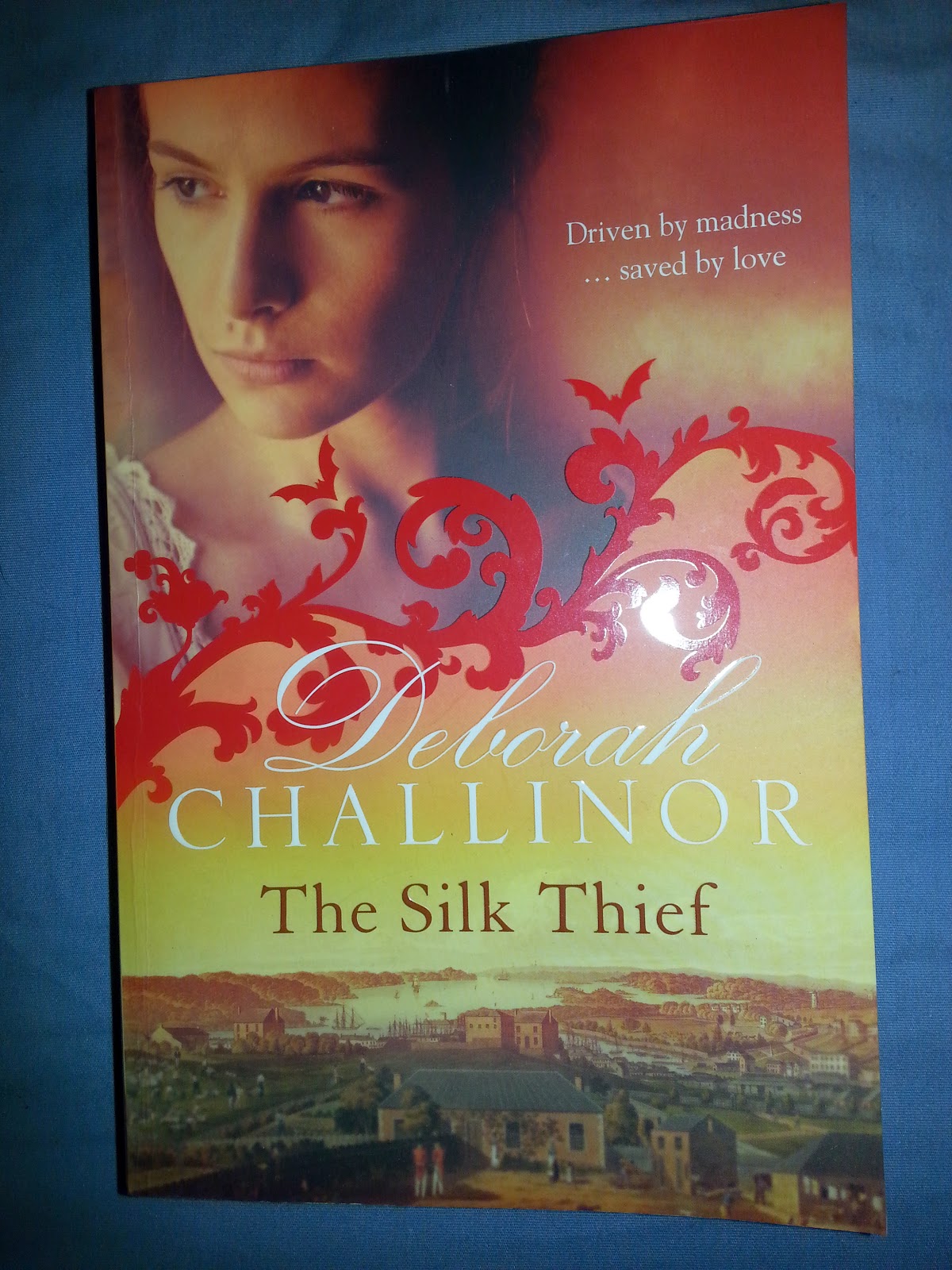
The Silk Thief by Deborah Challinor

I've already reviewed the first to books in this series by Deborah Challinor, Behind the Sun and Girl of ShadowsThe Silk Thief is the third book, with a fourth and final book released before the end of 2015.

Deborah Challinor has written another gripping story, with the action starting right from the first page.  Here is the front cover and back blurb:


This story continues where Girl of Shadows left off in the tale of Friday, Sarah and Harriet and their many friends and enemies.  Bella Jackson is still trying to extort the girls as she holds knowledge of their past deeds over them, and to add to that is the death of Bella's most hideous partner in crime by the young cabin boy on the journey from England to Sydney after Friday handed over the bribe money.
 
Add to the mix Harriet's frail mind, Friday discovering her soul mate, Sarah's determination to keep the blackmail by Bella under wraps from her husband and the discovery of some secrets and talents of several other characters, and this rich tale envelops you into the routine and the rhythm of their lives.
 
I read this book during the summer of 2014/2015 and I was left hanging for the final book to finish the story and tie up all the loose ends - particularly why Bella Jackson wanted to have such control over Friday, Sarah and Harriet.

Saturday, 4 October 2014

Longbourn by Jo Baker

I wandered into the bookshop before heading to a favourite café for a leisurely lunch.  I wasn't really sure what I was looking for, but I wanted an engaging read, and I had left all my current reading material at home before I headed for a quick break to the beach, during which I'd decided not to take the kitchen sink with me.

My eyes glanced over the shelves and settled on Longbourn by Jo Baker.


I am a big fan of Pride and Prejudice by Jane Austen, loving the book, the BBC miniseries (which I have watched over and over), the movie version with Keira Knightley and the Bollywood rendition call Bride and Prejudice (also watched multiple times).  I think I've read every Jane Austen book and avidly watched the movie biopic of her life, Becoming Jane.  Then there are the other spin offs like Clueless and the Bridget Jones' Diary series....

This book focuses on the people below stairs in the Austen class Pride and Prejudice, the characters that are seen and unheard in the book, the miniseries or the movie, who have few lines if any (excepting Hill, who probably has the most to say in any adaptation as the senior servant of the Bennet household).  The description of the running of the house and the lower working class is raw, and at times crass, as it depicts those who do the manual labour of a gentleman's household.

It brings up a few surprises and fills in the back histories about Mr and Mrs Bennet as well as the downstairs characters, and shows Wickham was a lot more debauched than even Pride and Prejudice alluded to.  We see Elizabeth as not so sure about herself as a young married woman, and how Jane and Elizabeth were conscious of giving their servants clothes that they no longer wore or books to read.

I polished this book off in less than 24 hours.  It was engaging.  It was funny, tender... horrific where it needed to be.  It is an honest glimpse into the running of a gentleman's house in the early 19th century and gives more information to the reader about the Napoléon war England was engaged in at the time than any of Austen's books ever does.

I do recommend this book as well worth reading if you are an Austen fan.  It will not taint your previous reading, but it complements and enhances what you enjoyed about Pride and Prejudice as a reader.

Tuesday, 22 April 2014

My Brother's War by David Hill

Each year I do a focus on Anzac Day in my classroom.  I'm always on the look out for great books that can communicate the New Zealand experience in the wars New Zealanders have gone to.  I also am a bit of a war novel junkie and have a slight obsession with war documentaries on the History Channel.

Last year the book I purchased as my main focus was My Brother's War by David Hill.

I bought this book last year to add to my Anzac Day resource collection.  I bought it at one of my favourite bookshops, Wright's Bookshop in Cambridge, which always has a great range of children's and young people's literature, a great range of New Zealand authors, and a great range in non-fiction as well.  I rarely leave this book shop without a purchase. 

I read this book to my class and then some children choose to read it themselves afterwards, and one child even bought the book herself.  When children want to re-read or buy the book for themselves, I think that is a great endorsement to the book itself.

David Hill is a well known and established New Zealand author who has written a number of novels and is a well known contributor to the School Journal.  He is a trained teacher and has been published internationally.  These are the links to his Penguin Books profile and his New Zealand Book Council profile and an interview with the Christchurch City Libraries.

The blurb on the back cover reads as follows:

My Dear Mother,
Well, I've gone and done it. I've joined the Army!
Don't be angry at me, Mother dear. I know you were glad when I wasn't chosen in the ballot. But some of my friends were, and since they will be fighting for King and Country, I want to do the same.
 
It's New Zealand, 1914, and the biggest war the world has known has just broken out in Europe.

William eagerly enlists for the army but his younger brother, Edmund, is a conscientious objector and refuses to fight. While William trains to be a soldier, Edmund is arrested.

Both brothers will end up on the bloody battlefields of France, but their journeys there are very different. And what they experience at the front line will challenge the beliefs that led them there.

A compelling novel about the First World War for 9-12 year olds.


The following text and the picture above comes from the Penguin Books New Zealand website:

Penguin Group (NZ) is proud that David Hill’s novel My Brother’s War has won the 2013 Junior Fiction category at New Zealand’s prestigious New Zealand Post Children’s Book Awards. The award was announced at a ceremony held in Christchurch last night. My Brother’s War was also the winner in the Children’s Choice Junior Fiction category.

My Brother’s War was released in August 2012 with great success. The compelling novel about the First World War – for 9-12 year olds – follows the lives of two brothers; William who eagerly enlists for the army, and his younger brother Edmund, a conscientious objector refusing to fight. While William trains to be a soldier, Edmund is arrested. Both brothers end up on the bloody battlefields of France, but their journeys there couldn’t be more different.

David is one of New Zealand’s most highly regarded authors for children and young people. His books have been published internationally and he has won awards for his writing in this country and overseas. David was made a Member of the New Zealand Order of Merit in 2004.

Margaret Thompson, Managing Director of Penguin Group (NZ) stated “We heartily congratulate David Hill and are delighted to share in his remarkable success.”  25 June 2013

My class was very excited when the news came through that My Brother's War has won the Junior Fiction category in the New Zealand Post's Children's Book Awards, as well as the Children's Choice Junior Fiction Award. 

The thing I found intriguing about this book was exploring what happened to conscientious objectors.  This link will take you to NZ History for a more detailed description of what a conscientious objector is.  I knew that those who were not enlisted often received white feathers and that conscientious objectors were arrested and put in jail and did hard labour.

What I did not know was that these conscientious objectors were then forced into the army and with no training sent to the Western Front in World War I.

Those who continued to resist were then subjected to what was known as 'field punishment no.1' - a brutal punishment devised by the military hierarchy, which Edmund is subjected to in this book.  TVNZ showed a movie on Tuesday 22 April 2014 called Field Punishment No.1, based on a book of the same name, based on the experiences of Archibald Baxter, New Zealand's most famous conscientious objector.  In fact, Archie is also a significant character in My Brother's War.

Even though My Brother's War is aimed at children aged 9-12, I think even teenagers and adults will thoroughly be engaged in this book.  I think it is a good book to engage boys with, however it was the girls in my class who re-read it for themselves.  It certainly opened my eyes to an area of war very rarely discussed, an area that has been touched upon lightly over the years.  This is definitely a book worth a read in my opinion.

Wednesday, 12 March 2014

Girl of Shadows by Deborah Challinor

Deborah Challinor is a well known New Zealand author and historian.  She has written both fiction and non-fiction books, notably historical fiction and history books about Vietnam soldiers and the consequences of their service in the Vietnam conflict on the health of them and their subsequent children. 
 
I've read a number of her books and enjoyed them, and as soon as I can get my boxes out of storage and unpack my books and get them back on my shelves I will review those books too.
 
Currently Deborah Challinor is living in New South Wales Australia, writing a series of books based on four girls transported to Sydney Australia as convicts from London.  Girl of Shadows is the second book of that series, and I have previously reviewed the first book, Behind the Sun.  You can read more about Deborah Challinor and her books on her website.


The first book Behind the Sun was released in 2012, and this book was released in 2013.  So I am anticipating that the third book of the series will be released in 2014.... and I can barely wait as I have enjoyed the first two immensely.

As the characters were firmly established in the first book, Behind the Sun, this book quickly gets stuck into the action.  Only Friday, Sarah and Harriet are in this book, after the tragic loss of Rachel, and they are haunted by the revenge they took on behalf of poor Rachel.

Many other main and secondary characters return in this book, and some new ones are introduced.  One reoccurring character is Bella Jackson, who knows of their secret revenge and is blackmailing them.

The doctor from the Isla pines for Harriet, who will not make anything of his advances because of his actions after Rachel died.  Harriet has fallen on her feet though, being placed with a family who are also tailors and dressmakers.  Her artistic talents are soon discovered and put to use.

Sarah has fallen on her feet working for Adam Green, the jeweller, but his wife Esther is a thorn in her side.  Sarah decides to take matters into her own hands where Esther is concerned, and this has results that surprise even her.

Friday is working in a brothel that has rather high standards and she is popular.  But she fights the demons of her actions with booze and bears the burden of the blackmailing.  She knows someone is out to get her and her friends, but she can't quite put her finger on it.

This book engrossed me and took me on a journey to Sydney 1830.  It certainly is not the Sydney I'd like to visit, but to read about what this town was like so early on in its existence and to compare it to the Sydney today is quite fascinating.

The story is still full of Challinor's descriptions of the times and places and people, but the plot moves a long at a pace to keep you engaged.

And then it is the end of the book, and you realise that the next book in the series is not yet in the shops and probably won't be for another nine or ten months, and you grieve that you are leaving these characters prematurely, before you know their fates.....

Thursday, 30 January 2014

Behind the Sun by Deborah Challinor

Deborah Challinor is a well known New Zealand author and historian.  She has written both fiction and non-fiction books, notably historical fiction and history books about Vietnam soldiers and the consequences of their service in the Vietnam conflict on the health of them and their subsequent children.
 
Currently Deborah Challinor is living in New South Wales Australia, writing a series of books based on four girls transported to Sydney Australia as convicts from London.  Behind the Sun is the first of that series.  You can read more about Deborah and her books at her website.
 
Here is the cover and blurb for Behind the Sun:


This book took a little bit to get started.  For some characters, we meet them before they end up in the Newgate Gaol and find out how they got there; and for some other characters, we meet them once they arrive in Newgate.  The conditions are vividly described and certainly leave a lot to be desired as far a living conditions go.

In these horrid conditions four young women bond, Friday (a prostitute), Sarah (a jeweller turned thief), Harriet (a seamstress that made a poor choice in a weak moment) and Rachel (a young naïve country girl) and work together to make the most of their meagre opportunities.  All four are sentenced to transportation to Sydney, Australia.

The book follows them and some other Newgate prisoners through the voyage to Australia, bringing in more characters from another gaol, the ship's crew and the first class passengers.  While the ship sails a major event happens that changes one girl's life forever, but also will continue to have ramifications for the other three girls long into the future. 

The story continues through to their first seven or eight months in the new colony.  Some of the women are assigned work placements and leave the Parramatta Factory (the gaol), while others stay for various reasons.  But tragedy will take place for one of the women, and the other three will seek revenge.  Unfortunately, they are not the only ones who know what they did.

I originally was purchasing the second book, Girl of Shadows, but the Whitcoulls sales lady pointed out that it was part of a series.  I have always quite enjoyed Deborah Challinor's books, so it wasn't hard for the sales lady to twist my arm to buy both books.

The first book did take a while to set up the characters, but as the book goes on it brings in more central and secondary characters to develop the story with the main plot and other sub plots.  Challinor is descriptive of Newgate, the voyage on the Isla, and what Sydney and the Parramatta Factory were like.  I found these descriptions added to the feel of the time and the events.

I came across this meme today, and it really does describe how I feel about the characters of a book.  As the story progressed, I became invested what would happen to Friday, Sarah, Harriet and Rachel, celebrating their successes and lamenting their failures.  This attachment deepened as I read the second book of the series.


Once I was engaged in the book plot and the characters, there was no putting this book down, and then I was quickly on to reading the second book, Girl of Shadows.  Read that review soon.
Saturday, 4 January 2014

Sunset Ridge by Nicole Alexander

I purchased this book on a bit of a whim from The Warehouse.  I am a bit of a browser in the book section most times I enter The Warehouse, just like at Whitcoulls or Paper Plus or my other favourite book stores Pennys (Chartwell Square) and Wright's Bookstore in Cambridge and that fantastic bookstore in Matamata that truly only has books!
 
I think what attracted me to this book, Sunset Ridge, was the cover, soldiers silhouetted in an obvious World War I setting.  I have to confess to being a bit of a historical novel junkie, and when you throw a World War in I'm generally hooked.
 
So here is the cover and back of the book blurb:


I haven't read this author before, but apparently Nicole Alexander is a best selling author in Australia and had a book called The Bark Cutters shortlisted for the Australian Book Industry Award in 2011, and yep, she is an Australian.  To find out more about Nicole Alexander and her books, click here.

It took a little bit for me to get into this book.  It starts out in 2000 in the Queensland outback on the road.  The introductory character, Madeleine, is rather prickly and not initially an easy character to connect with. 

Then, before you know it, you are flicked back into France, behind the Western Front, 1916.  You get introduced to a whole lot of new characters. 

Then you're in the Queensland outback in 1916 meeting more characters, Madeleine's forebears.  The novel flicks back between these settings and times throughout.  It gradually fleshes out the characters and their relationships and backstories and why they are who they are.  It also gradually puts together how an outback family and a French family have connections.

While it took me a good 200 or so pages to connect with this 472 page novel, I did eventually get invested in the characters and their story.  It also reaffirmed to me what a terrible war WWI was in terms of what mankind can do to each other, how the first industrial mechanical war could cause such havoc and have an effect long after it ended to the land and the people.  It also was interesting to see a side to the war that we don't often reflect on, how those with German ancestry in Australia (and most likely in New Zealand too), no matter how tenuous, were treated during that time.