I am Reading

This blog is all about what I am reading and sharing my reading with you. I will recommend books for grown up reading and children to read.
Showing posts with label World War II. Show all posts

Saturday, 10 December 2016

Enemy Camp by David Hill

I am a big David Hill fan, and over the last few years I think he has written some great books explaining life during times of war for young readers.  Enemy Camp is David Hill's 2016 offering.

I picked this book up from the teacher's table of a class I was relieving in, and for the second time this year, I was so enchanted by the book that teacher had, I went and bought it.  I have previously reviewed two other David Hill books: My Brother's War set in World War One about conscientious objectors and the conscription of soldiers, and Brave Company set during the Korean Conflict about a teenage boy in the New Zealand Navy.

Enemy Camp is set in the New Zealand town of Featherston during the second World War, where the Japanese prisoner of war internment camp was sited.  The book starts in late 1942 and followed events through until after the traumatic events of 25 February 1943 at the camp.

Here is the front cover and blurb:


The central character is Ewen, who is at primary school.  His teacher has asked the students in his class to keep a diary or journal of their lives, as he believes they are living through a very special time.  Therefore, the story is written in Ewen's voice in the format of a journal.  Some days he writes about quite mundane things, and other days he writes about some very dramatic events and how he views and feels about them.

Ewen's father works at the internment camp after returning from the Battle of Greece due to injuries sustained in battle.  Ewan and his friends Barry and Clarry (who is suffering from the after affects of polio) are fascinated by the inmates in the internment camp and take every opportunity to visit the camp.  This eventually results in the boys taking lessons in the Japanese language and ettiquette from one of the Japanese officers at the camp.

However, not everyone in Featherston feels so friendly towards the Japanese and they rail against any form of positive contact with the prisoners or their culture.  The prisoners of war also rail against what they consider to be unfair and struggle with the shame of being POWs, because now their families will shun them if and when the war ends.  They consider that death is more honourable than being a live POW.

This all combines to one of the most dramatic episodes of the war on New Zealand war, which Ewen, Barry and Clarry are in the middle of.  This event was so traumatic the New Zealand government suppressed it for a number of years for fear that if the Japanese government found out about it, they would mete out unfair treatment to the POWs in their care from New Zealand.  But New Zealand was yet to find out how truly terrible the treatment of POWs by the Japanese really was.

I would definitely recommend this book to boys from age 9 or 10 to read.  I will be adding this to my collection of books for ANZAC day and reading this to a class in the future.  It's a great Christmas gift for a boy aged ten and up.

Wednesday, 20 January 2016

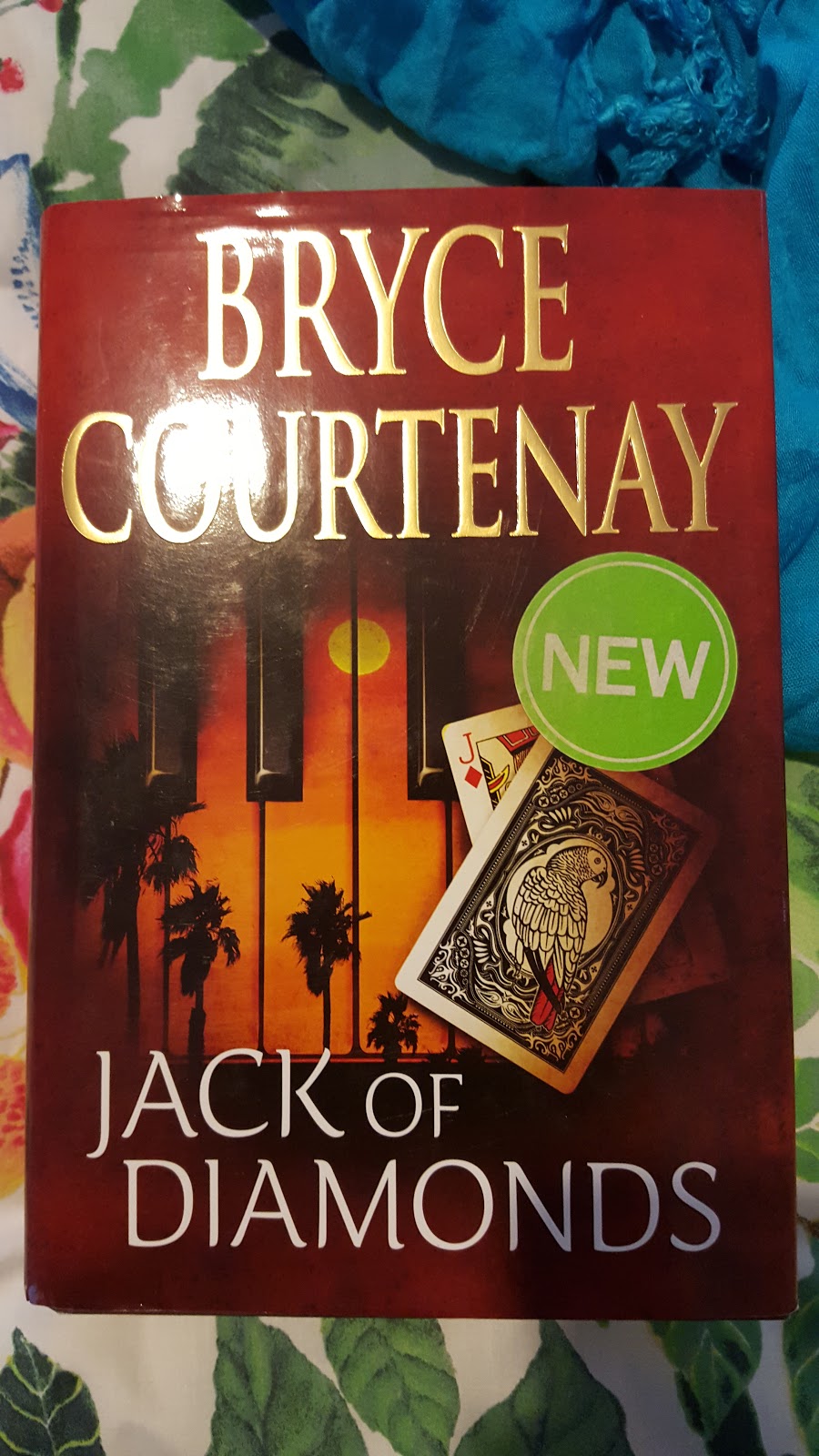
Jack of Diamonds by Bryce Courtenay

Bryce Courtenay is a legendary writer.  South African born and raised, Courtenay was a married man and father well established in the advertising world in Australia (he is credited with Louie the Fly and the Milky Bar Kid) when he began getting his writing published.  A quick glance through the titles he has had published, starting with The Power of One in 1989, shows me I only have a handful left to read.

Sadly, Bryce Courtenay passed away from gastric cancer in 2012 and his final book was Jack of Diamonds.  Here is the cover and blurb from the cover flap.


This book begins in the depressed slum of Toronto, Canada, in the Great Depression.  The title character, Jack Spayd, is lucky enough to catch the ear of a jazz pianist while playing a harmonica his father gave him out the back of a piano club and so begins his education thanks to a benefactor.  Jack serves a short apprenticeship playing piano in a prairie city out west before becoming a media and army entertainer in WWII Europe. 

On his return from war, Jack moves to Las Vegas after being prompted by an old war friend, who is from a mob family.  This is an exciting time, when Las Vegas rapidly developed from a small desert town into the neon flashing, 24 hour entertainment and gambling capital of the US.  Alas, another old war time friend is a constant threat to all who Jack holds dear in Las Vegas and finally an event tips the balance and Jack is left to contemplate his future without his dearest passion and the woman he loves.

This takes Jack to Africa, to a new adventure, where his talents with the cards win him friends and enemies, but his colour blind attitude to race causes him greater problems again.

At the end of the book, there is a footnote from Courtenay claiming he had material for a second book about Jack.... but he had run out of life to write it.  Instead his second book was squished into 13 page Epilogue which ties up the lose ends of the story of Jack Spayd.

What I love about Bryce Courtenay is that he is a great thinker of stories.  His novels have an epic quality.  However, they all have a degree of waffle that get on my goat.  The detail that Courtenay goes to his books can be a bit monotonous and longwinded.  It is as consistent in each of his novel as his voice is in the story telling.  I can picture Courtenay and his editor battling out how much waffle could be trimmed from each novel.  As much as the waffle irritates me, his epic story telling engulfs me in each of his novels every time.... and Jack of Diamonds is no exception.

I think this meme below sums up me as a reader and how easy it is to be enveloped into the world of story telling by Bryce Courtenay.

Tuesday, 19 January 2016

Pacific by Judy Nunn

Fun fact about this author: Judy Nunn is a well known Australian actress, particularly well known for her role in Home and Away as Ailsa Stewart, Alf's wife, and a screenwriter.  She has proven that not only is she a talent on the stage and screen, but Judy Nunn is also an engaging story teller.

Pacific is about a young Australian soap actress, Samantha, who goes to England to star in a pantomime in a seaside town.  She is boarded in a stately home which now offers luxury accommodation.  This is where time shifts back into the decades leading up to the second World War, focusing on the young girl who lived in the house and her working class best friend growing up into young ladies as WWII breaks out.


Samantha is offered a breakout film role to be filmed in Vanuatu.  The film is loosely based on a woman called Mumma Tack and her love affair with an American soldier in Vanuatu during WWII - a story which links back to the house Samantha stayed in in England while acting in the pantomime. 
 
I really enjoyed reading this book.  The switching back and forth between the modern and past times added texture and intrigue to the story.  Judy Nunn paints a vivid picture with words of the characters, places and times.